
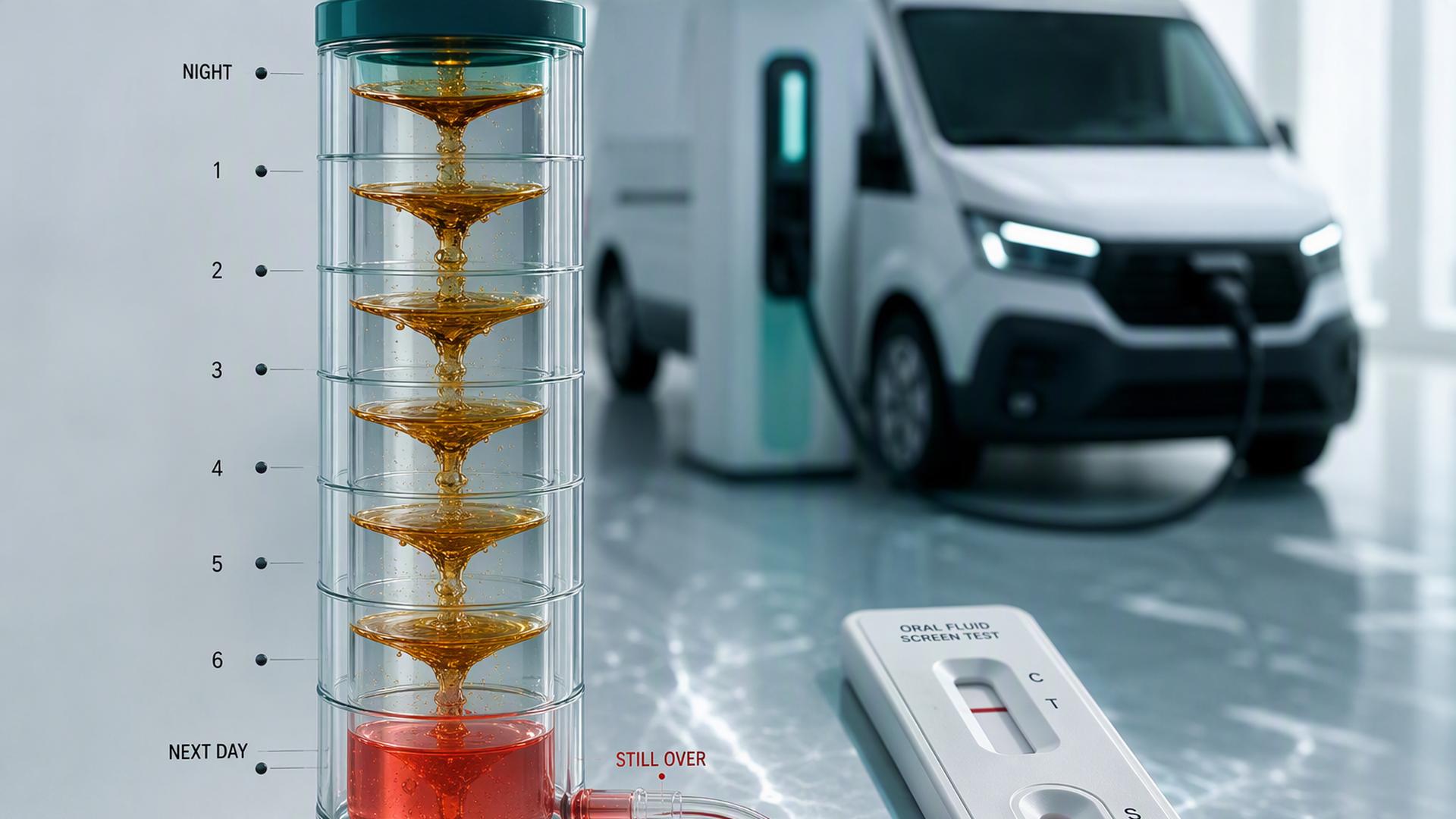
Cannabis Lingers Longer Than You Think: 6 Reasons You Could Still Be Over the Limit
Published by Drug Driving Solicitors, specialist UK solicitors defending drivers facing drug driving charges.
Cannabis can create a particularly difficult problem for drivers because the point at which someone stops feeling high is not necessarily the point at which THC has disappeared from their bloodstream. You might use cannabis in the evening, sleep normally and wake the following morning feeling alert, only for an evidential blood test to show that THC remains present at a legally significant concentration.
Under Section 5A of the Road Traffic Act 1988, driving, attempting to drive or being in charge of a vehicle with a specified controlled drug above its prescribed limit is an offence. In England and Wales, the limit for delta-9-tetrahydrocannabinol, or THC, is 2 micrograms per litre of blood. The government places cannabis within its low-limit, "zero tolerance" group, although the threshold is deliberately above absolute zero to account for matters such as accidental exposure.
1. Feeling Sober Does Not Tell You Your THC Level
People naturally use their own sensations to judge whether the effects of cannabis have passed. Once the relaxation, altered perception, slowed reactions or other noticeable effects disappear, it may seem reasonable to assume that the legal risk has disappeared with them. Unfortunately, subjective feelings cannot measure the concentration of THC remaining in the blood.
The Effects You Notice And The Level In Your Blood Are Different
Tolerance, dose, frequency of use and the method of consumption can all affect how intoxicated someone feels. A regular cannabis user may notice fewer obvious effects than an occasional user after a comparable dose, while two people with similar blood concentrations can experience the drug differently.
Section 5A Does Not Require Obvious Intoxication
The specified-limit offence is different from the offence of driving while unfit through drugs. GOV.UK states that it can be illegal to drive with certain controlled drugs above their prescribed blood levels even if those drugs have not affected the person's driving.
That distinction makes relying on how you feel particularly risky. You may be awake, coordinated and convinced that you are back to normal without having any way of knowing whether your blood THC concentration is above or below 2 micrograms per litre. Feeling sober can never substitute for a laboratory measurement.
2. Edibles Can Push The Cannabis Timeline Much Later
The way cannabis enters the body can substantially change its pharmacological timeline. Smoking, vaping and eating cannabis do not produce identical patterns of absorption, so a waiting period based on experience with one method cannot safely be transferred to another.
Oral Cannabis Has A Delayed Pattern
When cannabis is smoked or vaporised, THC enters the bloodstream rapidly through the lungs. Edibles must instead pass through the digestive system and undergo processing before their effects fully develop. Controlled research has found that the effects of oral cannabis may not become apparent for 30 to 60 minutes and can peak approximately 1.5 to 3 hours after consumption.
Different Products Create Different Clearance Timelines
Research comparing routes of administration has shown that inhaled THC typically rises quickly, whereas oral cannabis has a slower and more variable profile. One controlled study of cannabis brownies found substantial variation between participants, with THC detectable in whole blood for as long as 22 hours under the study's analytical threshold.
This becomes particularly relevant when cannabis is consumed late at night. Taking an edible shortly before bed does not necessarily mean its effects or concentration profile have been steadily declining for the entire period you were asleep. The delayed absorption associated with oral cannabis can shift the whole timeline later than a driver expects.
3. Frequent Cannabis Use Can Leave A Much Longer Tail
How often someone uses cannabis can make a major difference to how long THC remains measurable. Advice that might broadly reflect the experience of an occasional user may therefore be highly misleading for somebody who consumes cannabis regularly or heavily.
Repeated Use Changes The Detection Window
Scientific research has identified residual blood THC in frequent users after surprisingly long periods without further cannabis consumption. A systematic review found that some frequent users recorded blood THC concentrations above 2 ng/mL after six days of monitored abstinence.
A Generic Countdown Does Not Work For Everyone
The same review also found examples of concentrations above 5 ng/mL after more than a day of abstinence in some frequent users. This does not mean that every regular cannabis user will remain above a driving limit for days, nor does a particular blood concentration by itself establish impairment. It does show why recent use cannot always be inferred from a simple number of hours.
For drivers, the practical difficulty is obvious. Someone who has used cannabis frequently over a long period may follow a very different elimination pattern from a person who uses it once every few months. A friend's experience of being "fine the next morning" therefore provides little useful information about another person's blood THC concentration.
4. The Cannabis Limit Is Deliberately Very Low
Another reason drivers can be caught unexpectedly is that the THC threshold should not be understood as a concentration indicating that somebody must be heavily intoxicated. The law uses a specified numerical limit, and cannabis was deliberately placed within the government's low-limit approach to drugs commonly associated with illicit use.
It Is A Low-Limit Approach, Not A Severe-Impairment Test
The prescribed THC concentration in England and Wales is 2 micrograms per litre of blood. Government guidance describes the approach for cannabis and several other drugs as "zero tolerance", with limits set above absolute zero largely so that accidental exposure is not caught unnecessarily.
The Law Separates Concentration From Impairment
Section 5A was introduced specifically to create an offence based on the concentration of specified controlled drugs rather than requiring prosecutors to prove that a driver's ability was impaired. Government material expressly notes that offences can therefore be committed even where the person's ability to drive has not been impaired by the drug.
This explains why a morning-after drug-driving case can seem counterintuitive. A person may associate drug driving with obviously poor driving, slow reactions or visible intoxication, while the legal question in a Section 5A case can instead centre on a blood result exceeding a relatively low prescribed concentration.
5. Your Body Can Clear THC Differently From Someone Else's
Even where two people consume the same cannabis product at approximately the same time, their bodies do not necessarily process it at the same speed. Individual physiology creates another layer of uncertainty that makes fixed waiting periods difficult to rely upon.
Body Composition And Metabolism Matter
Body weight, body composition, metabolic differences, dose and other physiological characteristics can influence the concentration profile following cannabis use. Research into oral cannabis has, for example, identified differences in cannabinoid concentrations associated partly with body weight and body mass index.
Hydration Is Not A Reliable Way To Flush THC
Hydration and what a person eats or drinks can form part of the wider physiological picture, and government guidance recognises that physical characteristics and eating or drinking can affect blood concentrations. However, there is no established amount of water, coffee, food, exercise or sleep that can reliably force someone's blood THC level below the legal threshold by a particular time.
That is why calculations such as "eight hours should be enough" or "I drank plenty of water before bed" provide no reliable legal assurance. The government itself states that it cannot give dosage-based guidance for staying below specified drug-driving limits because there are too many variables in the way individuals metabolise drugs.
6. THC Does Not Leave The Body In The Same Way As Alcohol
Comparing cannabis with alcohol can create false confidence. Drivers are accustomed to hearing approximate alcohol-processing rules, but THC behaves differently inside the body and should not be treated as though it follows the same predictable hourly countdown.
THC Is Highly Fat-Soluble
THC is lipophilic, meaning it has an affinity for fatty tissues. Following cannabis use, its distribution and subsequent elimination can therefore be more complicated than simply removing a fixed quantity from the bloodstream during each passing hour.
Residual THC Can Persist After The Obvious Effects Have Gone
This characteristic is especially relevant following frequent exposure. Research involving regular cannabis users demonstrates that measurable THC can persist for considerably longer than the acute subjective effects of cannabis, with residual concentrations remaining detectable after extended abstinence in some individuals.
The practical lesson is that cannabis does not lend itself to a simple alcohol-style calculation. Time certainly matters, but there is no universal hourly clearance rate that allows a driver to work backwards from the legal THC limit and confidently determine exactly when they will fall below it.
Why The Morning After Can Still Carry Legal Risk
The difficulty with cannabis and driving is not simply that THC can remain detectable. It is that the legal threshold, frequency of use, body composition, route of consumption and individual metabolism can all interact in ways that are difficult to predict from how somebody feels. Someone who no longer experiences any noticeable cannabis effects may still be unable to know their precise blood concentration. Where driving is concerned, feeling normal the following morning should therefore never be treated as proof that the statutory THC limit has been cleared.
Frequently Asked Questions
Is There A Reliable Number Of Hours To Wait Before Driving After Cannabis?
No official waiting period guarantees that every driver will be below the THC limit. Clearance varies according to factors including frequency of use, dose, individual physiology and the way cannabis was consumed. Government guidance specifically says that it cannot provide dosage guidance corresponding to specified drug-driving limits because individuals metabolise drugs differently.
This makes cannabis different from alcohol, for which rough processing estimates are sometimes used. There is no home calculation that can establish your precise blood THC concentration. An evidential laboratory analysis is required to determine that concentration accurately.
Does A Positive Roadside Cannabis Swab Mean I Will Automatically Be Charged?
No. A roadside saliva test is a preliminary screening test rather than the evidential measurement used to establish the prescribed blood concentration. Following a positive preliminary result, a suspect may be arrested and required to provide an evidential blood specimen, which is then analysed.
Whether a prosecution follows will depend on the evidence obtained and the circumstances of the case. Questions can sometimes arise concerning the blood-taking procedure, forensic analysis, statutory requirements or an applicable defence, which is why obtaining specialist advice early can be important.
How Long Can Cannabis Remain Detectable In Blood?
There is no single detection window that applies to everyone. Following isolated use, blood THC may decline relatively quickly, particularly after inhalation, but the analytical detection period depends on the dose, test sensitivity, route of administration and individual characteristics. Controlled inhalation research has found rapid THC peaks followed by substantial declines over the following hours.
Frequent users can present a very different picture. Published research has documented residual THC above 2 ng/mL in some frequent users even after several days of abstinence. Importantly, being "detectable" is not the same thing as being above the statutory driving limit, and neither automatically proves current impairment.
Can I Be Prosecuted Even If My Driving Appeared Completely Normal?
Yes. A Section 5A prosecution does not depend on proving careless driving, dangerous driving or visible impairment. It concerns driving, attempting to drive or being in charge with a specified controlled drug above its prescribed concentration.
However, police do not have an unrestricted power to require a roadside drug test during every routine stop. Under Section 6 of the Road Traffic Act 1988, preliminary testing must be supported by one of the statutory grounds. These include reasonable suspicion that the person has a drug in their body or is under its influence, commission of a moving traffic offence, or involvement in an accident in the circumstances specified by the legislation.
Does It Matter If The Cannabis Was Prescribed Or Legally Used Abroad?
Where cannabis has simply been used recreationally abroad, the fact that its use was lawful in another country does not provide an automatic defence to driving above the applicable THC limit after returning to the UK.
Prescription medication is different. Section 5A provides a statutory medical defence where a controlled drug was prescribed, supplied or sold to treat a medical or dental problem and was taken in accordance with the instructions of the prescriber or accompanying medicine information. The defence does not protect a person from a separate prosecution for driving while impaired.
What Should I Do If I Am Charged After Using Cannabis The Previous Night?
Seek specialist legal advice as early as possible. A morning-after cannabis case may involve more than simply looking at the headline blood result. The timing and method of cannabis use, evidential blood procedure, forensic documentation and circumstances in which the preliminary test was required can all potentially require examination.
Avoid assuming that conviction is inevitable simply because a roadside test was positive or a blood concentration has been reported. A solicitor experienced in drug-driving cases can assess the prosecution evidence, identify any relevant statutory defence or procedural issue, and advise you on the appropriate response.
Drug Driving Solicitors focus on defending motorists facing drug-driving allegations throughout the UK. If you have been charged after a cannabis test showed a result above the applicable limit, contact Drug Driving Solicitors for a free and confidential initial consultation.